Flash Flood Cleanup in Round Rock, TX
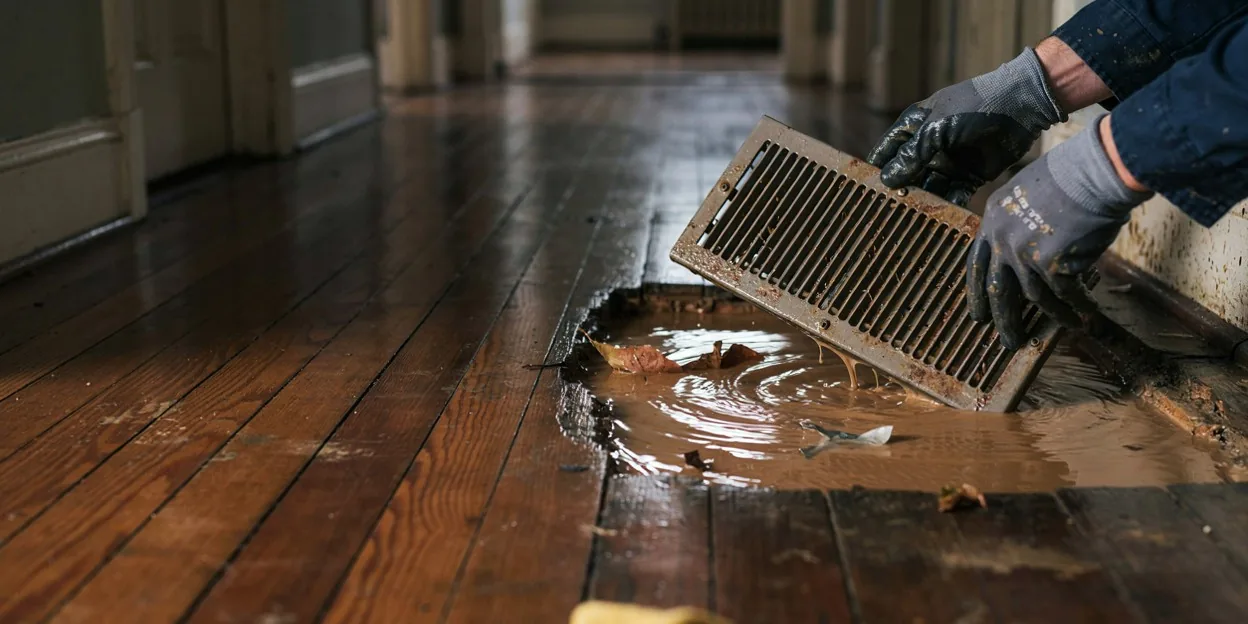
It rained four inches between lunch and dinner, the storm drain at the end of the cul-de-sac backed up, and brown water came under the garage door and across the utility room into the hall. Now the water is gone and it has left a line of mud on the drywall eight inches up. This site routes your call to an independent local provider who does flash flood cleanup in Round Rock and across Williamson County.
Mud, fuel, and storm-drain water: what is different about a creek flood
Water that came from the street or the creek is not clean. It picked up mud, lawn chemicals, fuel from the road, and whatever was in the storm drains, and it may have mixed with sewage if the sanitary system surcharged. That changes the job. The crew wears protective gear, pumps out the standing water, and shovels out the mud. Then porous materials the water touched, meaning drywall below the water line, carpet and pad, and particleboard cabinets, come out instead of being dried. Hard surfaces are cleaned and disinfected, and the house is dried after that.
The provider seals off the wet area from the clean rooms so mud is not tracked through the house, and logs what comes out. Structural drying follows once the contaminated material is gone.
What to do the night the creek comes up
Stay out of the water until the power to that part of the house is off. Do not drive through a flooded low-water crossing to get home. Once it is safe, photograph the water line on the walls and the mud on the floor before anything is moved. Get children and pets out of the wet rooms. Do not run the air conditioner if the air handler sat in water. Then call and say the water came from outside.
What a Round Rock garage flood takes with it
Most of the time the loss stops at the garage, the utility room, and the first few feet of the house, because the slab is a few inches above the driveway. The drywall gets cut a foot or so above the water line and the wet insulation behind it comes out. The bottom of the water heater and the washer and dryer get checked. Boxes and rugs on the garage floor are usually gone. Tile and sealed concrete clean up. Anything the crew removes, ask them to photograph first, because the record matters for both insurance and a flood claim.
Brushy Creek does not wait for a hurricane
Round Rock sits on the Balcones Escarpment, where storms stall and dump. Brushy Creek, Lake Creek, and Chandler Creek all run through town and rise within an hour of a downpour. On Memorial Day 2015, nearly five inches fell at City Hall in one afternoon, the ponds at Old Settlers Park went over their spillways, and water entered homes on Lake Creek Circle, Meandering Way, Cushing Drive, and Saint Williams Loop. The 23 dams the Upper Brushy Creek district maintains upstream hold back a lot, but neighborhood drainage still backs up when a storm sits over one square mile.
If the water came in through the roof instead of under the door, that is roof leak water damage. If it came from a pipe in the house, it is a cleaner job, and water extraction is the page to read.
Standard homeowners policies in Texas do not cover water that rose from outside; that is a separate flood policy through the national program. Ask the crew to document the water line, the mud, and every material removed, because the flood adjuster will want all of it.
Call after the water goes back down
Have the address ready and be ready to say how high the water got, which rooms it reached, and whether the power is off in that part of the house. Say if the air handler or the water heater sat in it. Call (512) 562-9101 and tell us what the storm left behind.